
Fort Myers Mortgage Broker
FHA Loans in Fort Myers, FL
An FHA loan is insured by the Federal Housing Administration, which allows lenders to offer more flexible credit and down payment requirements than many conventional programs. Ryan Meyer helps Southwest Florida borrowers determine whether an FHA loan is the right path to homeownership.
- Down payments as low as 3.5% with qualifying credit
- More flexible credit requirements than many conventional programs
- Requires upfront and ongoing mortgage insurance premiums that apply for the life of most FHA loans
Talk With Ryan
Let’s discuss your FHA loan options.
What Is an FHA Loan & How Does It Work?
An FHA loan is a mortgage insured by the Federal Housing Administration, a division of the U.S. Department of Housing and Urban Development (HUD). The FHA doesn’t lend money directly — private lenders like Ryan originate and fund the loan, and FHA insurance protects the lender against loss if the borrower defaults. That insurance is what allows FHA-approved lenders to offer more flexible credit and down payment guidelines than many conventional programs.
FHA financing is available only for properties you occupy as your primary residence, including 1-4 unit properties. It tends to fit first-time buyers, borrowers who are still building or rebuilding their credit history, and buyers who don’t have a large down payment saved but otherwise qualify based on income and debt levels.
Credit Score & Down Payment Guidelines
FHA’s own minimum guidelines, set out in HUD’s Single Family Housing Policy Handbook 4000.1, work on a two-tier system based on credit score:
- A credit score of 580 or higher can qualify for the minimum 3.5% down payment.
- A credit score between 500 and 579 may still be eligible for FHA financing, but requires a minimum 10% down payment.
- Below a 500 credit score, a borrower generally isn’t eligible for FHA-insured financing.
These are FHA’s own minimums. Individual lenders can — and often do — set higher credit score or reserve requirements of their own, so your actual qualifying score depends on the specific lender and loan file. Ryan can tell you where you stand once he reviews your credit and full application.
FHA Mortgage Insurance: Upfront & Annual Premiums
Every FHA loan carries two separate mortgage insurance charges, both set by HUD:
- Upfront Mortgage Insurance Premium (UFMIP): 1.75% of the base loan amount, generally financed into the loan rather than paid in cash at closing.
- Annual MIP: paid monthly as part of your mortgage payment. The rate depends on your loan term, loan amount, and loan-to-value ratio at closing. For a typical 30-year FHA loan with a loan-to-value above 90% — which describes most borrowers making the minimum 3.5% down payment — the current annual rate is 0.55%, charged for the full loan term. Borrowers who put down 10% or more on a 30-year loan pay a 0.50% annual rate, and it can be removed after 11 years.
Rates shown are HUD’s published FHA mortgage insurance schedule (Mortgagee Letter 2023-05) for base loan amounts at or below the applicable FHA limit; higher loan amounts and shorter loan terms use a different rate schedule. This is a meaningful tradeoff to weigh: unlike conventional private mortgage insurance, which can typically be cancelled once you build enough equity, most FHA borrowers who put down the minimum will carry annual MIP for the entire loan term unless they refinance into a different loan type.
| Illustrative example* | Amount |
|---|---|
| Base loan amount | $350,000 |
| Upfront MIP (1.75%, financed into loan) | $6,125 |
| Annual MIP (0.55% of loan balance) | ~$1,925/year (~$160/mo) |
*Illustrative only, not a quote or offer. Uses a $350,000 base loan amount and the 0.55% annual MIP rate as a simple example; annual MIP is recalculated as your loan balance amortizes, so the actual dollar amount declines gradually over time. Your own UFMIP and annual MIP will depend on your actual loan amount, down payment, and loan terms.
FHA Loan Limits & How FHA Compares to Conventional and VA Financing
FHA sets its own loan limits separately from conventional conforming loan limits, and they’re generally lower. For 2026, HUD’s nationwide floor for a one-unit property is $541,287, which applies in most of the country, including Lee County, Florida. That’s meaningfully below the 2026 conventional conforming loan limit of $832,750 for Lee County, so higher-priced homes in the Fort Myers area may need a conventional or jumbo loan instead of FHA financing.
How an FHA Loan Compares
| FHA | Conventional | VA | |
|---|---|---|---|
| Minimum down payment | 3.5% (580+ score) or 10% (500-579) | As low as 3% for qualifying borrowers, lender-dependent | Often 0% for eligible veterans |
| Mortgage insurance | Upfront + annual MIP, often for the full loan term | PMI if under 20% down, generally cancellable with equity | No monthly mortgage insurance; one-time funding fee (some exempt) |
| Credit flexibility | More flexible than many conventional programs | Typically stricter minimums | Flexible, VA/lender-dependent |
| 2026 one-unit loan limit, Lee County | $541,287 | $832,750 | No set VA loan limit; based on entitlement and lender guidelines |
General comparison only — every borrower’s actual costs, mortgage insurance requirements, and qualifying terms depend on the lender, loan program details, and individual application. Learn more about Conventional Mortgages or VA Loans.
Florida Considerations for FHA Borrowers in Fort Myers
- Condo approval: If you’re considering a condo, FHA generally requires the specific project to be on HUD’s approved condo list, or to qualify under FHA’s single-unit approval option. Not every condo building in Southwest Florida currently carries FHA approval, so it’s worth checking a specific property before you make an offer.
- Flood insurance: FHA requires flood insurance on any property in a FEMA-designated Special Flood Hazard Area, which describes a number of coastal and waterway-adjacent properties in the Fort Myers area. This is a real cost to budget for on the right property.
- Homestead exemption: If the home will be your primary residence, Florida’s homestead exemption can reduce your taxable assessed value — the first $25,000 applies to all property taxes, including school taxes, and a second $25,000 applies to the assessed value between $50,000 and $75,000 for non-school taxes only.
- Overall insurance costs: Homeowners and, where applicable, flood and windstorm insurance premiums in Southwest Florida can be significant. Factor these into your total monthly housing budget alongside principal, interest, and mortgage insurance.
What to Prepare Before You Apply
- Recent pay stubs, W-2s, or two years of tax returns if you’re self-employed
- Two months of bank statements for accounts you’ll use for your down payment and closing costs
- A valid government-issued ID
- A list of current debts and monthly obligations
- Documentation for any gift funds being used toward your down payment or closing costs
- Questions about your credit score tier, how much down payment fits your budget, and whether a specific condo or property is FHA-eligible
How Ryan Can Help
Ryan Meyer reviews your credit, income, and savings to show you how an FHA loan compares to conventional and other financing options.
He works with you through the FHA application and documentation process from start to closing.
REAL RESULTS
A Creative Path to an FHA Closing in Cape Coral
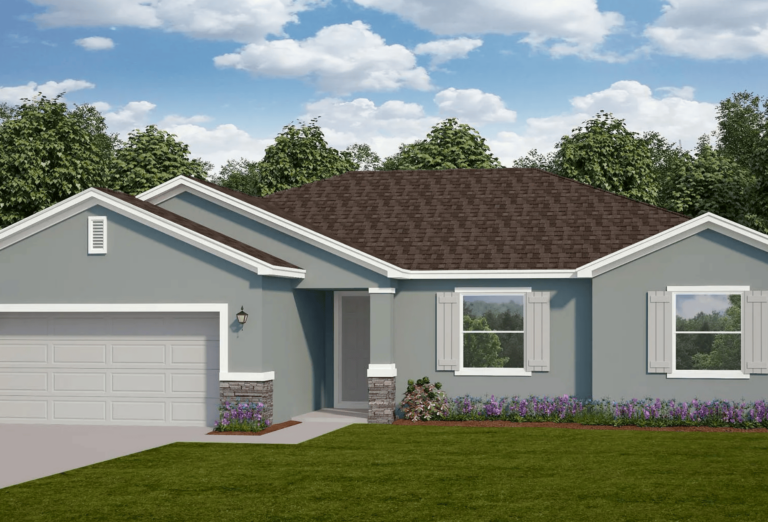
When a buyer couldn’t qualify alone, Ryan brought in a co-borrower to strengthen the file — and helped coordinate an unusually hands-on transaction with no agents on either side.
Frequently Asked Questions
Frequently Asked Questions
FHA’s own minimum is a 580 credit score for the 3.5% minimum down payment, or a score between 500 and 579 with a 10% down payment. Many lenders set their own higher minimums, so Ryan can tell you exactly where you stand once he reviews your credit.
FHA loans can allow down payments as low as 3.5% for borrowers who meet the qualifying credit requirements.
Yes, FHA loans require both an upfront mortgage insurance premium and an annual premium, which is included in your monthly payment.
FHA loans are for properties you occupy as your primary residence, including 1-4 unit properties, and the property must meet FHA appraisal standards.
Only if the specific condo project is FHA-approved, or qualifies under FHA’s single-unit approval option. Not every condo building in the area currently qualifies, so Ryan can help you check a specific property before you make an offer.
In most cases, yes, if you make the minimum down payment — annual mortgage insurance applies for the full loan term when your loan-to-value ratio is above 90% at closing. Putting down 10% or more can shorten that to 11 years, and refinancing into a different loan type later is another way some borrowers eventually remove FHA mortgage insurance.
Let’s Talk About Your Next Move
Ready to Explore FHA Financing?
Connect with Ryan Meyer to find out whether an FHA loan is the right fit for your homebuying goals.